Arogyam Hair Transplant and Cosmetic Surgery Clinic
Arogyam Hair & Cosmetic Clinic, Guwahati, Assam 8811077011, 7637089211 guwahatihairtransplant@gmail.com

Category: Laser Hair Removal

  • Preparing for Your Laser Hair Removal Session

    Preparing for Your Laser Hair Removal Session

    Preparing for Your Laser Hair Removal Session

    To get good results, proper preparation is essential:

    1. Stop Waxing or Plucking:

    • Avoid waxing, threading, or plucking for 2–4 weeks before your session.

    • These methods remove hair from the root, making it harder for the laser to target the follicle effectively.

    2. Shave the Area Carefully:

    • Shave the treatment area 24 hours before your appointment. Laser works well when hair is present in the follicle but not above the skin.

    3. Avoid Sun Exposure:

    • Sunburned or tanned skin can be more sensitive to laser light. Use sunscreen and avoid direct sun exposure before and after sessions.

    4. Skip Self-Tanners and Creams:

    • Avoid applying self-tanning products or heavy lotions on the treatment area at least 48 hours before your appointment.

    5. Stay Hydrated & Comfortable:

    • Hydrated skin responds better to treatment. Wear comfortable clothing that doesn’t rub on the treated area.

    🏥 Why Choose Arogyam Hair Transplant Clinic – Guwahati

    At our clinic, we offer advanced diode laser technology for hair removal — precisely calibrated for various skin types and treatment areas. Our team ensures comfort, safety, and optimal results in every session.

    Whether you’re preparing for your first laser session or considering switching from traditional methods, our experts are here to guide you through every step. Say goodbye to constant shaving and painful waxing — and hello to smoother, lasting results.

  • Laser Hair Removal for Different Skin Types: Safety and Efficacy

    Laser Hair Removal for Different Skin Types: Safety and Efficacy

    Laser Hair Removal for Different Skin Types: Safety & Efficacy

    Introduction

    Unwanted hair can feel like a constant chore — shaving, waxing, threading, all with repeated cost, discomfort and downtime. Enter laser hair removal: a modern cosmetic solution that promises smoother skin for longer. But the key to success lies in matching the treatment to your skin type and hair characteristics. At Arogyam Hair Transplant & Cosmetic Surgery Clinic in Guwahati, we specialise in tailoring laser hair removal to diverse skin tones, ensuring both safety and optimal results.

    1. How Laser Hair Removal Works

    Laser hair removal works on the principle of selective photothermolysis — the laser light is absorbed preferentially by the pigment (melanin) in the hair follicle, heating and destroying the root while leaving surrounding skin largely unaffected.

    Different lasers or light systems (diode, Nd:YAG, IPL) use specific wavelengths suited for different skin colours and hair types.

    2. Why Skin Type Matters

    • Lighter skin tones: Traditionally yield excellent results because contrast between hair pigment and skin allows the laser to target follicles without much risk of skin damage.

    • Darker skin tones: Higher melanin in the skin itself poses a greater challenge — the laser energy may be absorbed by the skin as well as the hair, increasing risk of burns or pigmentation issues. With modern equipment (e.g., longer wavelengths, cooling systems), these risks are reduced and treatment becomes much safer.

    • Hair colour & thickness: Darker, coarser hairs absorb laser energy better; very light or fine hairs (blond, grey, vellus) are more resistant to laser removal.

    3. Our Dual-Laser Approach at Arogyam

    At our Guwahati clinic we use an advanced diode laser (808nm) with a 10-array diode chip and sapphire cooling system, paired with IPL (540nm/590nm) for a “dual-laser” strategy. This allows us to treat a wide range of hair depths and skin types effectively.

    The cooling sapphire tip protects the skin surface while delivering energy to the follicles, reducing discomfort and risks.

    4. Safety & Efficacy Across Skin Types

    • For darker skins: We select longer wavelengths (e.g., 1064 nm Nd:YAG) or adjust settings to reduce risk of hyper- or hypo-pigmentation.

    • For lighter skins: Shorter wavelengths with higher contrast settings may be used safely and efficiently.

    • Efficacy: Most patients require 6-8 sessions spaced 4-6 weeks apart to maximise hair reduction, though results depend on hair density, growth cycle, skin/hair colour. 

    • Maintenance: Some clients may need touch-up sessions after 1-2 years, especially in hormonally sensitive areas.

    5. Pre-Treatment & Post-Treatment Tips

    Pre-treatment:

    • Avoid sun tanning or direct sun exposure for 2-4 weeks before.

    • Shave the area to be treated the night before; do not wax or pluck (you want the follicle intact for the laser to target).

    • Inform your doctor about any medications or skin conditions (e.g., active acne, inflammation).

    Post-treatment:

    • Use broad-spectrum sunscreen on treated areas. Sun exposure increases risk of pigment change.

    • Avoid hot baths/steam/scrubs for at least 24-48 hours.

    • Expect temporary redness or swelling; contact us if you notice blistering, pigmentation changes, or prolonged discomfort.

    6. Is It Right For You ?

    Laser hair removal is suitable for most healthy individuals who:

    • Have unwanted coarse hair and a realistic expectation about outcomes.

    • Are willing to commit to multiple sessions.

    • Understand that no method guarantees 100% long-term hair reduction; aim is significant reduction and smoother skin.

    At Arogyam Hair Clinic, Guwahati, we conduct a detailed skin and hair assessment in our consultation to decide whether you’re a good candidate and which laser parameters suit your skin and hair type.

    7. Why Choose Our Clinic in Guwahati?

    • Equipped with cutting-edge dual-laser technology tailored for varying skin tones.

    • Experienced team familiar with Indian skin types and regional tanning/hormonal factors.

    • Individualised treatment planning: we don’t use a “one-size-fits-all” protocol.

    • Emphasis on safety, comfort and results — minimal downtime, maximum smoothness.

    Conclusion

    Laser hair removal offers a smart, long-term solution to unwanted hair — but its success depends on matching the right technology to the right skin and hair type. Whether your skin is light, medium or dark; whether hair is thick or fine — the right settings, professional expertise and after-care make all the difference. At our Guwahati clinic, we’re committed to helping you achieve smoother, hair-reduced skin with safety and confidence.

    Ready to begin your journey? Schedule a consultation with us today and discover the plan that’s made for you.

  • Laser Hair Reduction at Arogyam: Top 20 FAQ

    Laser Hair Reduction at Arogyam: Top 20 FAQ

    Laser Hair Reduction uses powerful light of one particular frequency to destroy hair follicles

    It depends on the principle that the hair root being black in colour absorbs more light energy than the surrounding skin and hence gets destroyed while the skin is not harmed

    Most of the hair roots are destroyed for the long term leaving the skin soft and smooth for the long term

    Multiple sessions are required, 6 to 8 sessions may be required for long-lasting reduction at intervals of 4 to 6 weeks

    Results are very good, most hair gets destroyed for the long term and will never grow back.

    Hair can be reduced from the whole body – for females the favourite parts are face, arms and legs and for males, beard, chest and back.

    How does laser reduce hair?

    Laser hair reduction depends on the principle called selective photothermolysis, in which certain cells absorb light energy and this causes them to heat up and get destroyed. It depends on the fact that the black roots of hair absorb certain light frequencies at far higher rates than the surrounding skin due to their black colour, and this selectively heats up the root cells and destroys them, thus destroying the whole hair.

    How many sessions are needed?

    Long-lasting laser hair reduction requires 6 to 8 sessions at intervals of 4 to 6 weeks. This is because lasers act selectively on hairs which are growing actively, and those hairs which are in a dormant stage are not affected and start growing, and will be affected only in further sessions.

    Is it painful?

    Pain during laser hair reduction is minimal, it is often compared to a snapping rubber band. Pain is further minimised in our clinic by using the latest in-motion technique.

    Is the hair removal long-lasting?

    Yes, most hairs removed with lasers are for the long term removed but not all. There are some constraints to this. Firstly, soft and light hairs are not removed by lasers. Lasers act good on black and thick hairs. Hence hairs which are thin and light coloured will not be removed by lasers. Secondly, upto 10% of hairs which are removed initially can grow back after a period of 6 months to 2 years. This can require a further two or three sessions after 2 year. Thirdly, in conditions which predispose to excess hair like hormonal abnormalities or steroid use, there may be recurrence of hair growth after 1 year. Fourthly, some hairs in some persons can be resistant to lasers for unknown reasons. But overall, lasers will vastly reduce hairs in all persons and that is why laser hair reduction has become one of the well known cosmetic procedures throughout the world.

    Isolated hairs, resistant hairs, etc can be treated with electrolysis which is available in Arogyam.

    What are the advantages of other methods of hair removal?

    Although there are other methods of hair removal like waxing, hair removal creams, threading, shaving, etc, laser is considered effective because hair reduction is long-lasting, avoids problems like folliculitis and cuts and leaves the skin more soft and smooth as even the hair roots are destroyed so that there is no stubble.

    Is it effective on white hairs?

    No, lasers are not effective on white hairs, as white hairs do not absorb the laser light. White hairs are removed using Electrolysis which is available in Arogyam.

    Is it suitable for all types of skin and hairs?

    Lasers work well on fair skin with black hairs. In dark persons, higher light energy has to be used and more sessions are needed. So also in lighter coloured hairs, more sessions may be needed. In hairs which are light coloured and thin, lasers may not work at all.

    In such cases, electrolysis is used which is equally effective on light coloured hairs also.

    Is it safe for facial hair?

    Yes, it is very safe for facial hair and in fact this is one of the most commonly requested parts for laser hair reduction. However, it should be known that soft and light hairs will not be removed with laser.

    What laser machine is used in Arogyam?

    Arogyam uses a very advanced Diode laser maching, using a sapphire cooled 10 Array diode laser machine.

    What are the complications of laser hair reduction?

    Complications are very rare in Laser hair reduction. Some of the known complications of Lasers are superficial burns, reappearance of acne, and dark pigmentation. These complications are rare and temporary, they can be easily reversed.

    What precautions should I take after the laser procedure?

    No special precautions are needed and people can get back to work immediately after the procedure. One ointment has to be applied for 3 days and sunscreen used when going out in the sun.

    What precautions should I take before the procedure?

    Before:

    Avoid waxing and threading from six weeks before the procedure as it removes the roots of the hairs which need to be destroyed by the laser light.

    Avoid shaving and de-epilatory creams from 2 days before the procedure – these do not affect the hair roots but the hair should not be removed completely

    Use sunscreen when going out from 1 month before the procedure, do not use procedures like bleaching, derma-abrasion, etc for 1 month before the procedure. Simple procedures like facials can be done upto 2 days before the procedure

    Inform the doctor about any conditions like POCD or any other skin ailment.

    Day of procedure:

    Wear loose clothes which can be pulled back to expose the area to be lasered.

    Avoid makeup if facial hair is to be removed

    After the procedure:

    Sun exposure is to be minimized, sunscreen is a must when going out in the sun

    A steroid-antibiotic ointment will be given which is to be applied as directed

    How much time will it take for the procedure?

    Laser therapy takes only about 20 to 30 minutes per part, for example, laser of the face will take about 20 minutes and laser of the legs will take about 30 minutes. Patient can go back to work right after the procedure, there is no need to take rest.

  • Facial Hair Reduction by Dual Laser in Guwahati

    Facial Hair Reduction by Dual Laser in Guwahati

    Facial Hair Reduction by Dual Laser in Guwahati

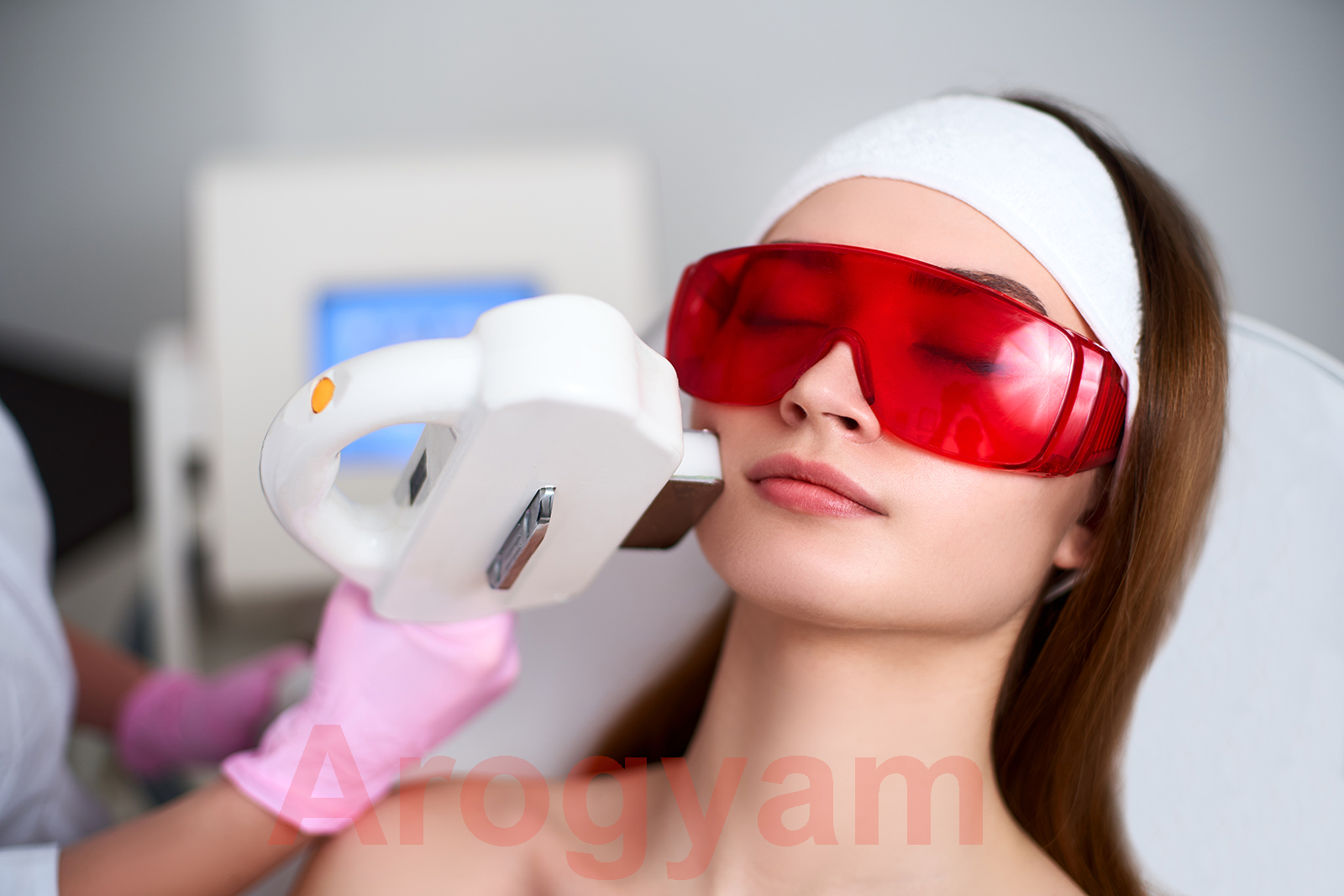
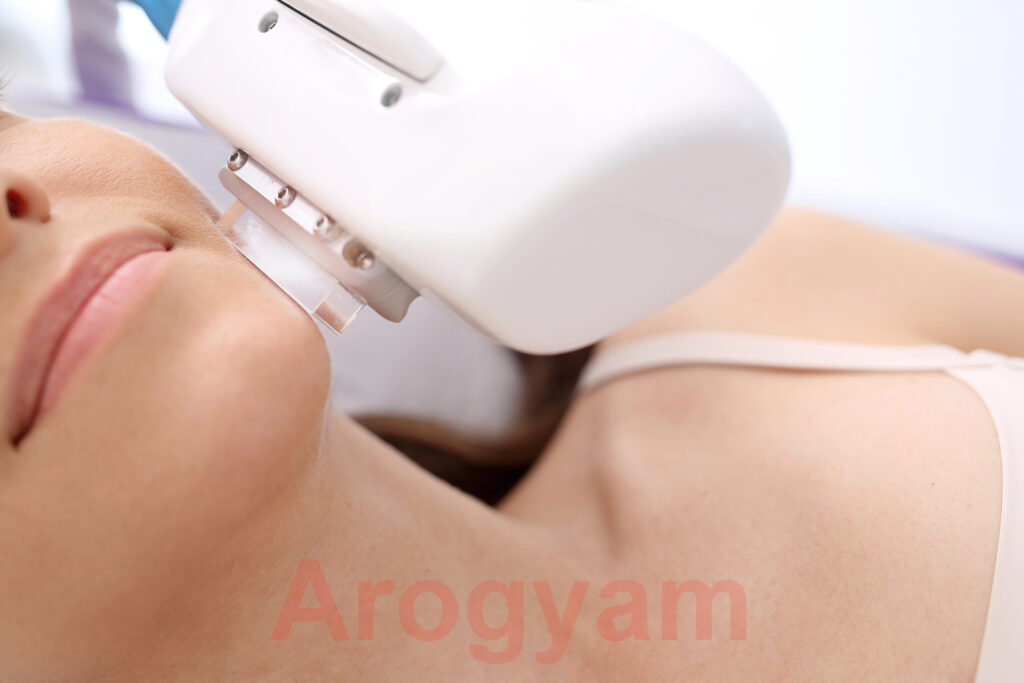
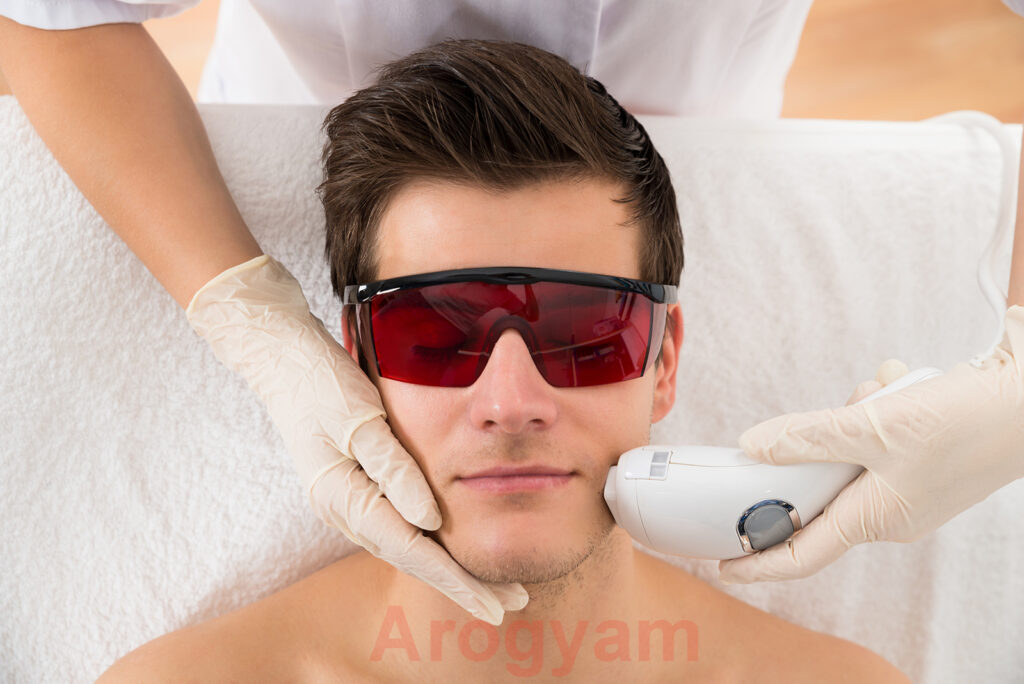
    Facial Hair removal is the most commonly desired area for Long-lasting Laser Hair removal in Guwahati, Assam. Arogyam Hair Clinic uses Dual Laser System combing cutting edge Diode laser at 808nm and IPL laser at 690. This ensures good results at affordable prices. Both males and females ask for facial hair removal.

    Laser Hair Removal is a process in which the high energy from laser light is used to destroy the roots of hairs without harming the skin, thus leading to removal of unwanted hair.

    Laser hair removal depends on the process called selective photothermolysis, which means that the black roots of hairs absorb more of the laser light than surrounding skin and thus gets heated up and destroyed while skin itself is not harmed. 6 to 8 sessions are required for complete removal at intervals of 4 to 6 weeks, so that the whole process can take upto 6 months.

    Laser hair removal is very effective in eliminating unwanted hair. A small percentage of the hair which has been removed may grow back after 6 months to 1 year, and repeat sessions may be required after 2 years. This recurrent hair is only a small fraction of the original hair, and is also lighter and softer. The majority of hair is removed safely and for the long term. However, it should be noted that soft light coloured hair which occurs naturally on the face of all persons is not removed by laser.

    hair transplant in Guwahati

    Facial hair removal is the most commonly desired area for laser hair removal Laser facial hair removal is very safe and effective for removal of hair on the face. Both Males and Females desire facial hair removal In males, many males want complete removal of moustache and beard hair. This is for various reasons like wanting a smooth skin, avoiding the chore of daily shaving, etc Partial hair removal of beard which is too high on the cheeks is also desired by many males Facial hair removal is the most commonly asked for area for hair removal in females Many females have unwanted hair in the beard and moustache area which requires regular removal This hair can be safely and for the long term removed with laser However, it must be realized that soft and light hair which occurs naturally on all persons and which may be more in some persons are not removed by laser, it is only the thicker hairs which can be removed by laser. Females with facial hair should undergo hormonal testing to rule out any hormonal abnormalities like high testosterone which can lead to excess hair. 6 to 8 sessions at intervals of 1 month are required for complete removal. Some lighter and thinner hairs may not be removed completely. Also retouch sessions may be required in some persons after 1 or 2 years. Arogyam Hair Transplant and Cosmetic Surgery Clinic uses a very advanced Diode laser with 10 array Diode chip and Sapphire cooling for a highly effective and pain free hair removal.

  • Complications of Laser Hair Removal

    Complications of Laser Hair Removal

    Complications of Laser Hair Removal

    Diode laser hair removal is generally considered as a very safe procedure. Complications are rare, and when they do occur are temporary and soon subside. It does not have any serious complications.

    Some complications which are possible are:

    Acne recurrence: in those who are prone to acne, some acne can reappear after laser therapy to the face. Exact cause is unknown. These acne can be treated normally, they soon disappear with treatment.

    Recurrence of herpes: in those who are suffering from herpes simplex, there may be a recurrence of symptoms of herpes after facial laser. This is a temporary phenomenon and is treated normally as other herpes.

    Hypo and hyperpigmentation: some patches in the treated areas can become lighter or darker than normal. This is temporary and soon disappears.

    Blisters and burns: blisters and burns may occur rarely in some cases. Such burns are always to the most superficial layer of the skin. They heal easily and quickly and heal without any residual scarring. Burns and blisters are very rare in laser hair removal and have not occurred as yet in Arogyam Clinic.

    Paradoxical hypertrichosis: this is the name given to the condition when there is growth of hair after treatment with lasers. This is a very rare phenomenon. Exact cause is unknown. Such hair growth usually occurs in areas which were previously hairless. It is believed to be due to stimulation of the hair cells by lasers. This hair growth is treated with lasers along with other hair growing areas and disappears along with the normal hair with treatment.

    One common question that is asked by many is whether laser hair removal causes cancer. Lasers have no relation whatsoever to cancers. This confusion arises perhaps because of the fact that sun tanning using artificial UV light is known to slightly increase the risk of skin cancer. But UV light is totally different from the lasers used in laser hair removal. But perhaps many people get confused with the information found in the internet and this raises the doubt among them. To reiterate, laser hair removal has no relation whatsoever to cancer.

  • Principles of Laser Hair Removal

    Principles of Laser Hair Removal

    Principles of Laser Hair Removal

    This article is for those who are interested in the technical details of Laser Hair Removal.Laser hair removal depends on the principle called ‘Selective Photothermolysis’. Basically, hair being black, absorbs more of the laser energy, and gets heated up and destroyed.

    This absorption depends on the color characteristic. Particular colors absorb particular wavelengths, for example, a red colored object absorbs all wavelengths except the red wavelengths which are reflected back. Black colored objects absorb all wavelengths. The colored part of the objects which absorb laser light is called chromophore. In the body, there are two main pigments or chromophores which we are interested in — red hemoglobin and black melanin. In hair removal, we want a light which is preferentially absorbed by black melanin and not absorbed by red hemoglobin.

    Melanin is the pigment which gives color to our hair and skin. There are in fact three types of melanin — black eumelanin, brown eumelanin and pink pheomelanin. Black eumalanin alone colors hair black and brown eumelanin alone colors it blonde. A mixture of black and brown eumelanin is the most common and different proportions gives different colors to our hair ranging from jet black to brown. Pheomelanin gives a pink color to our lips, nipples, glans penis and vagina. A mix of pheomelanin and brown eumelanin gives red hair.

    Another type of melanin is neuromelanin which is found in the brain.

    In the hair, the melanocytes are found in the hair bulb. These melanocytes produce melanin continuously during the anagen growing phase of the hair. This melanin is injected into the keratin cells which form the keratin of the hair thus coloring the hair. Hence the whole hair from the shaft to the bulb is colored by melanin.

    Melanin is also present in the skin. It is present in the basal layer of the epidermis. The epidermis is the outermost layer of the skin and is just 0.1 mm in thickness, about the thickness of a sheet of paper. The basal layer of the epidermis contains melanocytes, which forms melanin which gets distributed in all cells of this layer. Below this is the dermis, the main layer of the skin which can be between 1.5 and 4 mm in thickness.

    The hair follicle extends upto 4 mm in depth into the skin. The germinal cells of the hair, from which the hair is formed, lies at a depth of about 1.6 mm in the skin.

    When laser light falls on the skin, the melanin of both the skin and hair absorbs this energy. In the hair, it is the shaft of the hair which contains melanin and heats up. As the hair shaft gets heated, it damages the germinal cells which surrounds the shaft, and this leads to obliteration of the hair.

    Both skin and hair melanin absorbs laser heat energy, but in fair skin such as Europeans and Americans, very little energy is absorbed by the skin and so this is not a problem. In dark skin as in Indians, the skin absorbs more energy.

    The reasons damage occurs to hair and not the skin are:

    1. Hair contains much more melanin than skin. Black hairs absorb much more energy than the skin. This is the main reason why hair gets preferentially destroyed. Black hairs as in Indians are thus a good candidate for Laser Hair Removal. Light hairs such as blonde or brown hairs are not so easily damaged and white hairs are not damaged at all.

    2. Different depths of hair and epidermis. The melanin containing layer of the epidermis is very superficial, while hair lies at a greater depth. Longer wavelengths of light penetrate deeper and spare the superficial layers, and this leads to much less damage in the skin.

    3. TRT or thermal relaxation time. This is the time which a body takes to lose heat. Skin has a much larger surface area than the hair shaft, which means that it cools down much faster. The hair shaft retains heat much longer. This is taken advantage of through two techniques — by increasing the pulse width in the stamp technique and through the low fluence multiple pass technique.

    There are various characteristics of the laser light and skin and which interact in this and affect how the absorption of laser energy takes place. The wavelengths between 600 and 1100 nm are preferentially absorbed by melanin, and so we want lasers which emit light within this wavelength.

    Longer wavelengths penetrate deeper into the skin leaving the melanin in the skin untouched and affecting the melanin of the hairs. But on the other hand, the longer the wavelength, the lesser is the absorption, and short wavelengths are absorbed more. So Nd-YAG lasers which have the longest wavelength are the safe for dark skin, but their effectiveness is also less requiring more number of treatments. The Ruby laser on the other hand, is effective but also has the potential for skin damage. The diode laser falls in the middle of this range, and hence is considered the most useful.

    Hair color is most important, as already discussed, and also hair thickness, density,etc.

    Skin color of course is important, at the same time skin moisture, softness and smoothness all affect the laser interaction.

    Skin color is divided into six types based on the Fitzpatrick scale:

    Fitzpatrick classification of skin types.

    Type I Always burns, never tans

    Type II Always burns, sometimes tans

    Type III Sometimes burns, always tans

    Type IV Rarely burns, always tans

    Type V Moderately pigmented

    Type VI Black skin

    Most Indians fall into Type 4, a few fairest ones fall into type 3 and a few in type 5. But in general it can be assumed that all Indians, specially in the North East, are in type 4.

    Four main types of laser have been used for laser hair removal:

    Ruby laser: Its wavelength is 694.3nm. It is very well absorbed by melanin. However it is not found suitable for darker skin.

    Alexandrite laser: Alexandrite laser was one of the most commonly used lasers till the diode was discovered. Its wavelength is 755 nm. It is well absorbed by melanin and is also suitable for dark skin.

    Diode laser: Diode laser has emerged as the gold standard of laser hair removal. Its wavelength is 810 nm. As such it falls in the middle of the range, being well absorbed by melanin of the hair and still having waves which are long enough to spare the epidermal layer of the skin.

    Nd-YAG laser: This has a long wavelength, of 1064 nm. Because of this it spares the skin to the highest degree. But at the same time, its absorption is also much less and so a larger number of treatment sessions are needed with this. It is most suitable for Skin types 5 and 6 and not necessary for the Indian skin type.

    Besides the type of laser, there are a number of parameters on the laser machine which need to be manipulated to get optimal results.

    Parameters of laser machine

    There are three main parameters in the laser machine which are adjusted according to the type of hair and skin:

    Fluence: Fluence is the power of the laser light. Just we can adjust the brightness of some lights, the power of the laser can also be adjusted and this unit is called Fluence. The higher is the Fluence, the more is the power of the laser and hence more hairs will get destroyed. But the power cannot simply be made very high, as part of the laser light will also be absorbed by the skin, and so raising the power indefinitely will also tend to cause skin complications.

    Pulse width: Pulse width is the length of time for which the laser is ‘on’. Increasing the pulse width will give more energy to the skin and thus destroy more hair. But just as in fluence,we cannot simply increase the pulse width as skin may get damaged. Unit for pulse length is msec.

    Rate: Rate is the number of times in a second for which the laser fires. It can fire once a second, two times a second and so on. The more the rate, the more the energy delivered to the skin if the laser is trained on the same spot. Rate is usually adjusted according to the technique the operator is using and how fast he or she is moving on the skin. Unit is denoted as n.

    These three parameters are adjusted according to the skin and hair type. Increase in any of these three parameters will increase the energy delivered to the skin and thus destroy more hair, but at the same time chances of damage to the skin is also more. Hence adjustments have to be made for this. In fair skin, a high fluence is administered to destroy more hairs and the pulse length is kept small to minimize pain and skin damage. In dark skin however, such high fluence cannot be administered because of chances of skin damage. However, it is noticed that pulse length can be increased to compensate as increasing pulse length does not cause much skin damage. So in dark skin, lesser fluence with longer pulse length (msec) is administered to achieve the same effect. Pulse rate, n, is adjusted according to the operator’s comfort.

    Another very important part of the Diode Laser machine for hair removal is the cooling device. Cooling of the tip of the laser applicator is essential to minimize skin damage, and also pain and discomfort. Various types of cooling devices like cold air, cryo techniques, etc have been used in lasers. A very modern technique is to use a sapphire cooling device. This is also the technique used in the laser in our clinic.

    Arogyam Hair Transplant and Cosmetic Surgery Center uses a good and modern machine, the Diode Laser machine, for safe and long-lasting removal of hair at a competitive price, in Guwahati, Assam and entire North East.

    Techniques of laser hair removal:

    There are two main techniques used by the operator during Laser Hair Removal.

    Stamp Technique:

    Here the laser emitting window, which is a small square window, through which the laser spot is emitted, is placed on the skin in a stamping method, like using a rubber stamp on paper, and the whole area is covered. It is the most common technique used. The main parameters to be adjusted are Fluence, the power of the laser light, and pulse width, or the time for which the laser is on. For fair skin, a high fluence is used to cause adequate hair damage, and to compensate for this to avoid skin damage, a low pulse width is used, for example, Fluence can be from 25 to 40 and pulse width around 10-20. But for dark skin, such high fluence cannot be used as it may cause damage to the skin. So Fluence has to be lowered. But it has been found that pulse width in turn can be increased, and this will not cause harm to the skin as the skin cools off quickly. So in dark skin as in Indian skin types, fluence is kept low, from 10-15, and pulse width is increased, from 30 to 60. This ensures selective harm to the hair follicles while skin remains unharmed.

    Low Fluence Multiple Pass Continuous Motion technique:

    This is a recent technique which has proved to be a big boon for dark skin. This takes advantage of the fact that skin cools off quicker than the hair follicle due to its larger surface area. It allows for high heat build up in the hair with low fluence, so that there is no harm to the skin at all. Here the operator uses the hand piece in continuous motion, as in ironing clothes, without stopping at any point. As an area is touched, both the skin and hair follicle heats up, but as there is a small gap till the next pass of the laser, the skin cools down in the meantime while the follicle retains some heat. At the next pass the follicle acquires more heat while the skin cools down again till the third pass and so on. As this continues, a very high heat builds up in the hair follicle while the skin remains at normal temperature. This allows us to heat up the hair with a very low fluence, thus ensuring that there is no harm at all to the skin while destroying the hair follicle more effectively. Here fluence is kept low, from 10-15 and pulse width around 20 msec, and rate from 5-10. Multiple pass technique is very useful for both fair and dark skin, but is a special boon for dark skin as very effective hair removal can be done while still being very safe for the skin.

    Advantages of multiple pass technique are:

    1. Much less pain and discomfort

    2. Much more effective destruction of hair

    3. Much less skin complications.

    Multiple pass technique is used in Arogyam Laser Hair Removal. Stamp technique is also very important in some areas like the lip, near the eyes and in pubic area where surrounding areas need to be guarded carefully.

  • The Dual Laser Hair Removal System at Arogyam, Guwahati

    The Dual Laser Hair Removal System at Arogyam, Guwahati

    The Dual Laser Hair Removal System at Arogyam, Guwahati

    In Arogyam Hair Transplant and Cosmetic Surgery Clinic, a dual combination of Diode Laser and IPL Elight Hair Removal is used for a more comprehensive hair removal effect to achieve complete success.

    Diode Laser which has a wavelength of 810nm is considered the gold standard of laser hair removal. Lasers emit light at a very specific wavelength. This is due to the property of lasers itself which is related to quantum physics. The frequency of 810nm has been found to be ideal for hair removal. The lesser the wavelength, the more the power of the light but the lesser the depth of penetration. That is, a wavelength of 640nm, that of Alexandrite Laser, will have more power but lesser depth of penetration into the skin. A higher wavelength will be the reverse, ie, a wavelength of 1264nm, which is that of Nd Yag Laser, will have a deeper penetration into the skin but will have lesser power.

    A wavelength of 810nm is considered ideal because it reaches the middle ground of having optimal depth of penetration and at the same time carrying high power. Hence Diode Laser is considered the gold standard for hair removal.

    At the same time, wavelengths of 640nm and 1032nm also have the advantages of penetrating to different depths. Hair follicles have different depths and this partly explains the reason why some hairs remain after many hair removal procedures. Thus using light energy of different wavelengths will ideally achieve the highest results.

    An IPL device works differently from a laser. Here the mechanics are more simple – the light emitting source is simply a bulb which emits a very strong light at all frequencies from 400nm to 1200nm. To get the desired wavelength, cutoff filters are used. For hair removal, a cut off filter of 640nm is used, this means that wavelengths from 640nm to 1200nm are allowed to pass through. Thus when IPL is used, this range of light wavelengths are allowed to interact with the skin. This allows the light energy to act at different depths, though with lesser energy than a laser. Thus hairs which escaped the diode laser because of being at different depths are also destroyed with this. Moreover the IPL Hair Removal system of Arogyam Cosmetic Clinic uses Optical Elight, where light energy is combined with RF energy to achieve better results.

    Thus by combining Diode Laser with IPL Optical ELight, ArogyamHair Transplant and Cosmetic Surgery Clinic Guwahati is able to achieve much better results in hair removal. The Diode laser delivers high energy power at the most useful level and achieves maximum clearance, while the IPL Elight system destroys few remaining hairs at different levels. This gives optimal hair removal results. The first three sessions are done with Diode laser and the remaining sessions are done by using IPL along with Diode over resistant hairs at the same cost.

  • Pubic Hair Reduction by Dual Laser in Guwahati

    Pubic Hair Reduction by Dual Laser in Guwahati

    Pubic Hair Reduction by Dual Laser in Guwahati

    Unwanted hair can be a big irritant for many people. Many females regularly get rid of excessive hair on their private parts.This is done through various methods like shaving, waxing, depilatory creams, etc.

    However this has problems: shaving can cause cuts and there can be infection causing folliculitis, de-epilatory creams can sting in sensitive areas, waxing can be painful.

    All these methods also have to be done regularly. Growing hair can be irritating if there is delay in hair removal.

    Laser long-term hair reduction offers a solution to this. Laser hair removal works on the principle of selective photothermolysis. The black hair roots absorb much more of the laser light than the surrounding skin and gets heated up and destroyed, while the skin and other tissues remain unharmed.

    The hair in the pubic region can be got rid of for the long term, so that all these difficulties can be avoided. Pubic hair removal is one of the most commonly asked for regions for long-term hair reduction. Laser hair removal is very effective in the pubic region.

    Clients can go for full pubic hair removal (also called Brazilian method) or bikini line removal. In bikini line removal only hair on the upper thighs and lower abdomen which may be showing when a swimsuit is worn is removed.

    6 to 8 sessions are required at monthly intervals. Pubic hair removal is done by female nurses in full privacy.

    Most persons will achieve upto 90% of long-term hair reduction or more. A few hairs may regrow after a period of 1 to 2 years, such hairs are lighter and softer, and maintainance sessions may be required after 2 years for this.

  • Laser Hair Reduction for Men in Guwahati

    Laser Hair Reduction for Men in Guwahati

    Laser Hair Reduction for Men in Guwahati

    Laser Hair removal uses laser light to remove excessive hair in both males and females. Arogyam Hair Clinic uses Dual Laser system of cutting edge Diode Laser with IPL laser for good results at affordable prices.

    Laser hair removal uses strong light energy from laser machines to remove hair for the long term. The black roots of the hair absorb laser light selectively and heat up and get destroyed, while the surrounding skin is not injured. Multiple sessions of laser therapy are required, generally 6 to 8 sessions are required at intervals of 4 to 6 weeks. Maximum hair is for the long term removed at the end of all the sessions but a few hairs may grow back and this may require another two or three sessions are two years. Laser hair removal is very safe – complications are rare and easily reversible.

    Laser hair removal is quite commonly done by males are well. The areas which are requested by males are:

    Beard and Moustache:

    Many persons ask for removal of hair from beard and moustache for various reasons. Beard and moustache hair can be removed quite well by laser therapy. Six to eight sessions are required for complete removal at intervals of 4 to 6 weeks.

    Laser Hair Reduction for Men in Guwahati

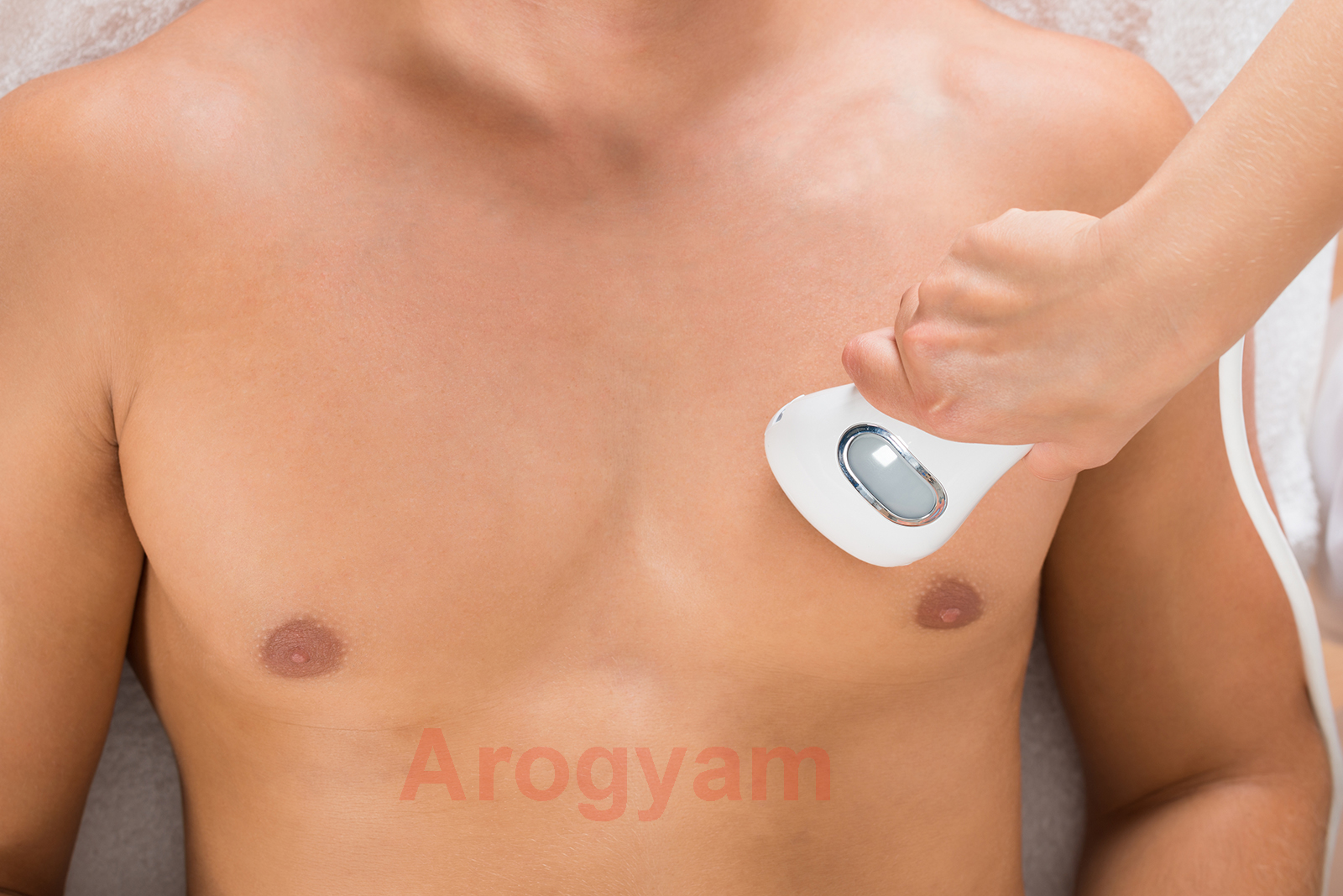
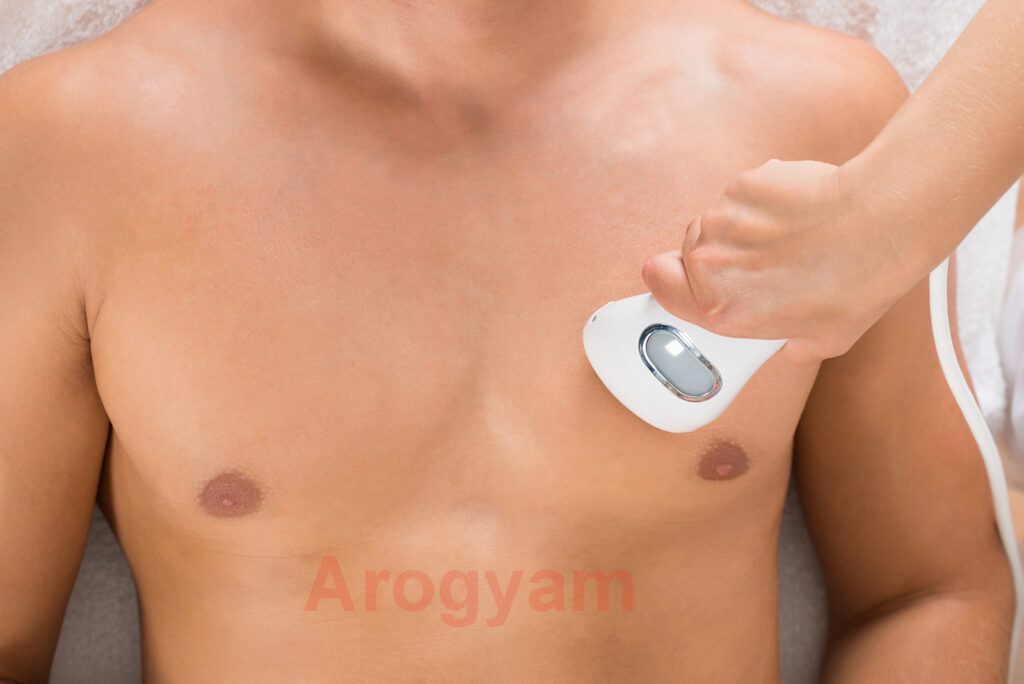
    Chest and abdomen:

    Many males have excessive hair on the chest and abdomen. This can be both cosmetically undesirable and can also cause foul odour.

    Back:

    Excessive hair on the back is also quite frequently seen and this can be removed easily.

    Arms and Legs:

    Many males also have excessive hair on the arms and legs and want this to be removed for cosmetic reasons.

    Underarm hair:

    This can cause foul odour and can be removed with laser.

    Pubic hair:

    Sometimes pubic hair removal is also asked for

  • Laser Hair Reduction for Women in Guwahati

    Laser Hair Reduction for Women in Guwahati

    Laser Hair Reduction for Women in Guwahati

    Long-lasting Laser hair removal is well known among ladies. Arogyam Hair Clinic Guwahati offers the the dual system of hair removal combining cutting edge Diode Laser with IPL removal for good results at good prices.

    Excessive hair is often a matter of concern to many ladies. Women resort to different techniques to get rid of unwanted hair, like shaving, waxing, threading, etc. However they all have various complications. Shaving can cause cuts and folliculitis or inflammation of hair roots, waxing is painful, etc. The biggest problem is that these have to be done continuously – any delay in shaving or waxing for example will cause an unsightly stubble to appear. Hence many women look for a procedure that will remove hair for the long term.

    Laser Hair Removal is a procedure which removes hair for the long term with minimal side effects. Lasers act by targeting the roots of the hairs – the roots being black absorb light energy preferentially and get heated up and destroyed, and this leads to long-lasting removal of most hairs. Light and thin hairs are not removed as efficiently, and there is some regrowth of hair after a year, which requires further sessions, but in general the vast majority of hairs will be removed for the long term, and this is why laser hair removal has become the well known cosmetic procedure in females. A big advantage over other hair removal methods like shaving is that the hair is destroyed upto the root, and so the skin becomes very smooth and soft.

    Laser hair removal requires 6 to 8 sessions at intervals of 4 to 6 weeks. There is minimal pain, the pain is compared to a snapping rubber band. Complications are very rare, and are easily reversible, and consist mainly of superficial scalding, hyper or hypo pigmentation, etc. No rest time is required, the patient can go back to work directly from the doctor’s office.

    Laser Hair Reduction for Women in Guwahati

    Arogyam Hair Transplant and Cosmetic Surgery Clinic uses a very advanced Diode Laser which has a 10 Array Diode with Sapphire cooling for good results. This is combined with IPL Laser hair removal using Elight system so that good results are obtained.

    To rule out any hormonal causes for excessive hair growth, hormonal tests are done which will be advised by the physician.

    The main areas which are asked for in female Laser Hair Removal are:

    Face: Many women have unneeded hair in the beard and moustache area which is cosmetically unappealing and this is the most common area for female hair removal. Facial hair removal is very safe and very effective. But it must be noted that fine light coloured hair, called vellus hair, which is present all over the face, is more difficult to remove with Lasers. It is mainly the thicker darker hair in the beard and moustache area which can be removed easily with lasers. Dual system of combining Diode Laser with IPL is used to be effective even for lighter hairs.

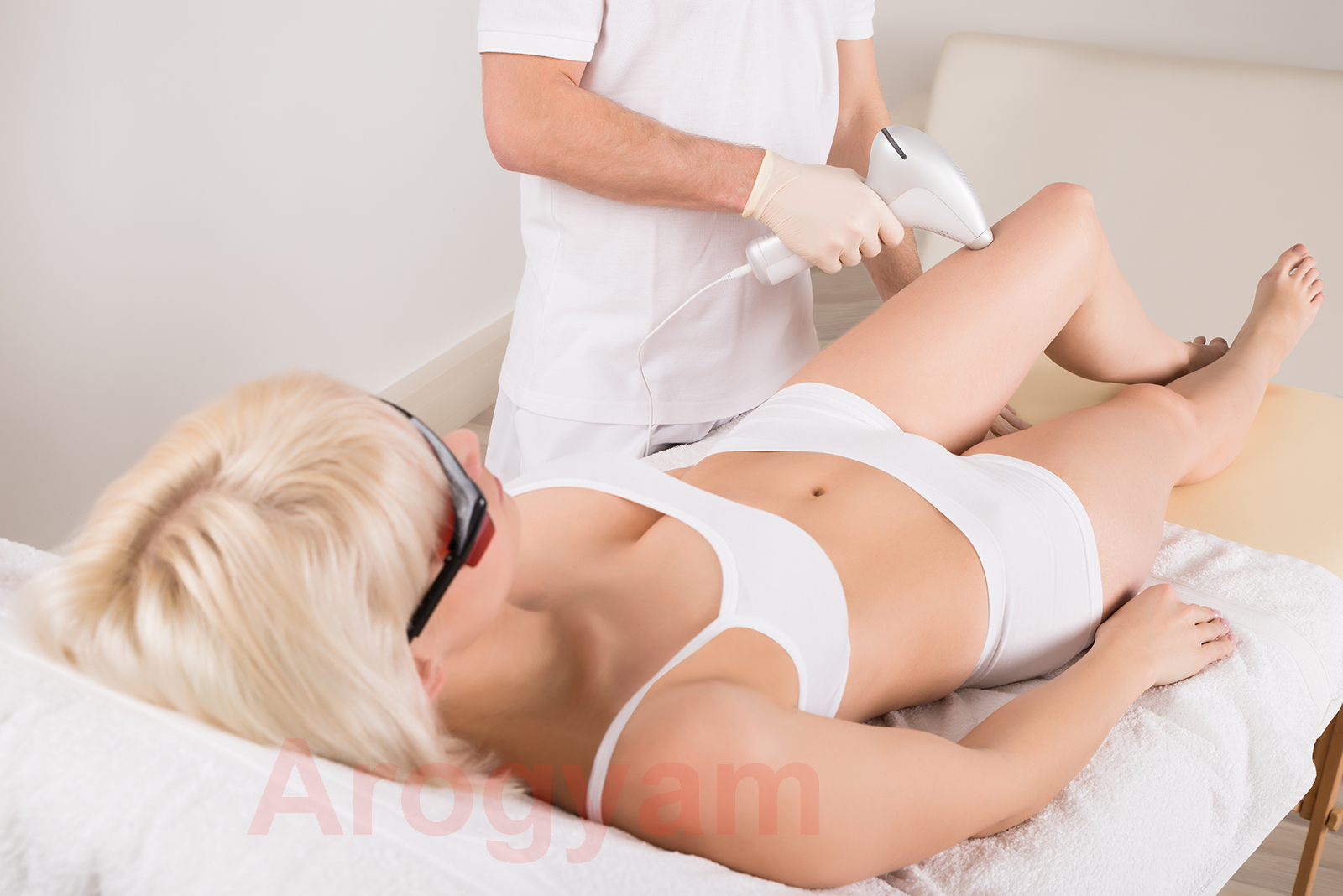
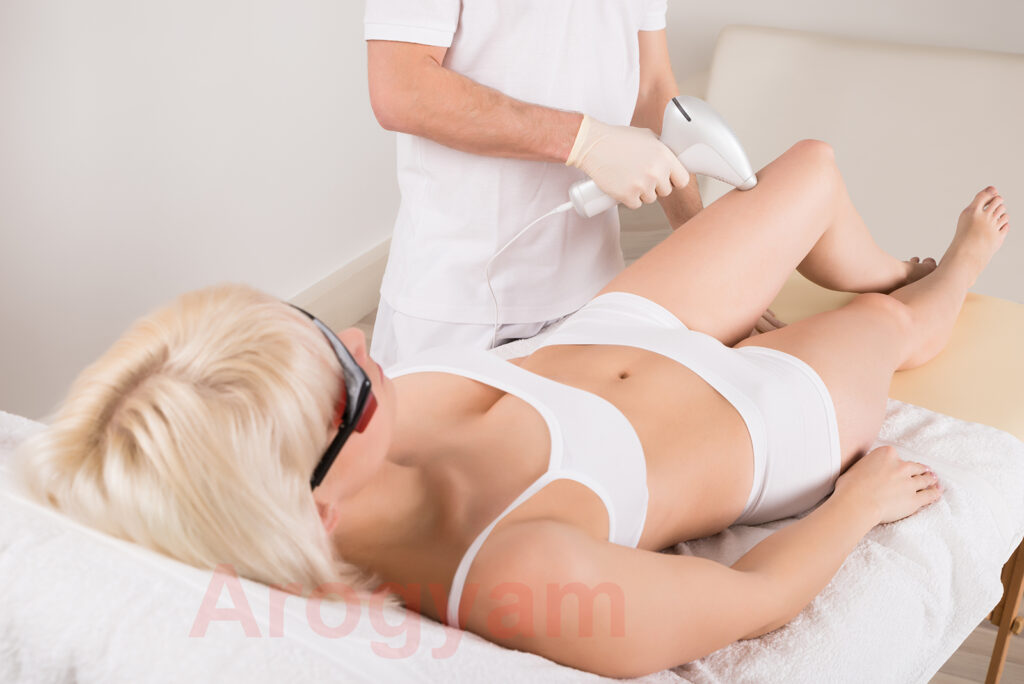
    Arms and legs: Arms and legs are the second most common area for hair removal in females. 6 to 8 sessions are required at intervals of 4 to 6 weeks.

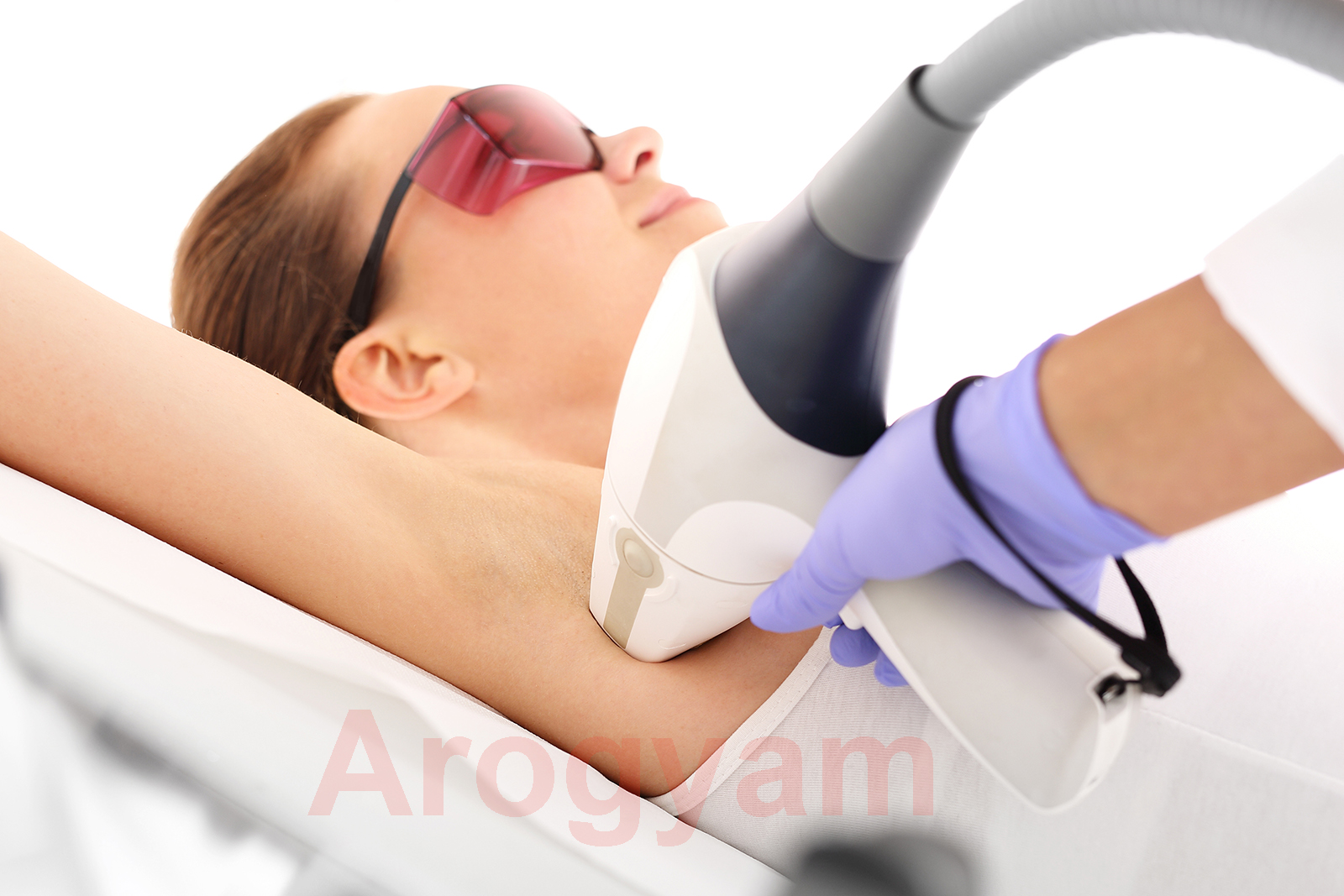
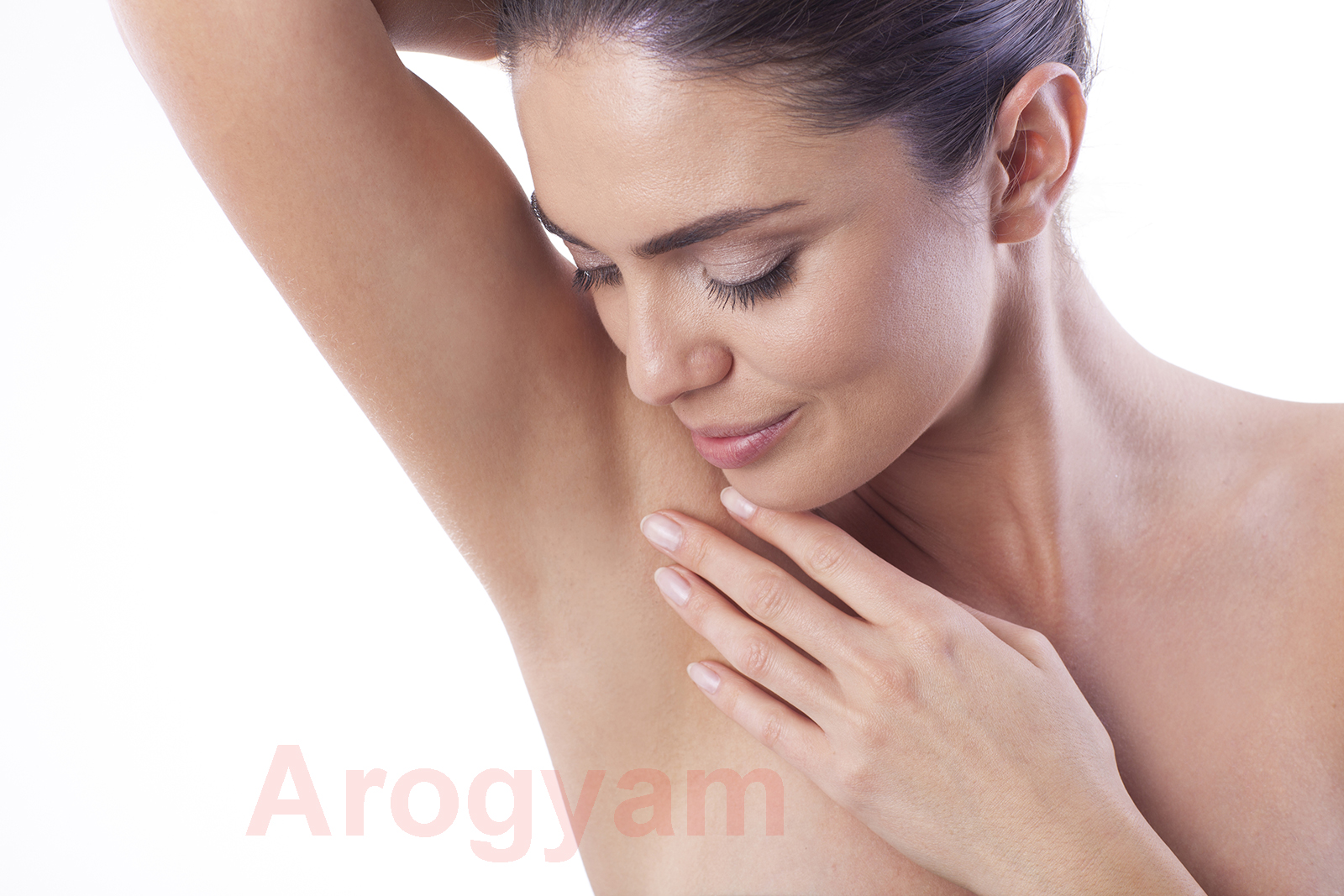
    Underarms: Underarms are also a very common area for laser hair removal. Regular shaving or waxing of this area can lead to pigmentation. This can be avoided with Laser hair removal which will remove the hair for the long term.

    Pubic area: Pubic area is also a frequently sought for area in females. Pubic laser hair removal is very effective. Patients can go for complete removal or bikini line removal. All procedures are performed by trained female nurses and full privacy is maintained.

    Other areas: Sometimes women may have hair in unwanted areas such as around the areola, in the back, chest, etc. This hair can also be removed safely and effectively with lasers.