
Stages of Baldness: Understanding Hair Loss Progression
Hair loss is one of the most common concerns among men today. While occasional hair fall is normal, progressive hair thinning or a receding hairline may indicate male pattern baldness, medically known as androgenetic alopecia.
Understanding the stages of baldness is important because it helps determine effective treatment option, including hair transplant procedures.
The Norwood Scale – The Standard Classification of Baldness
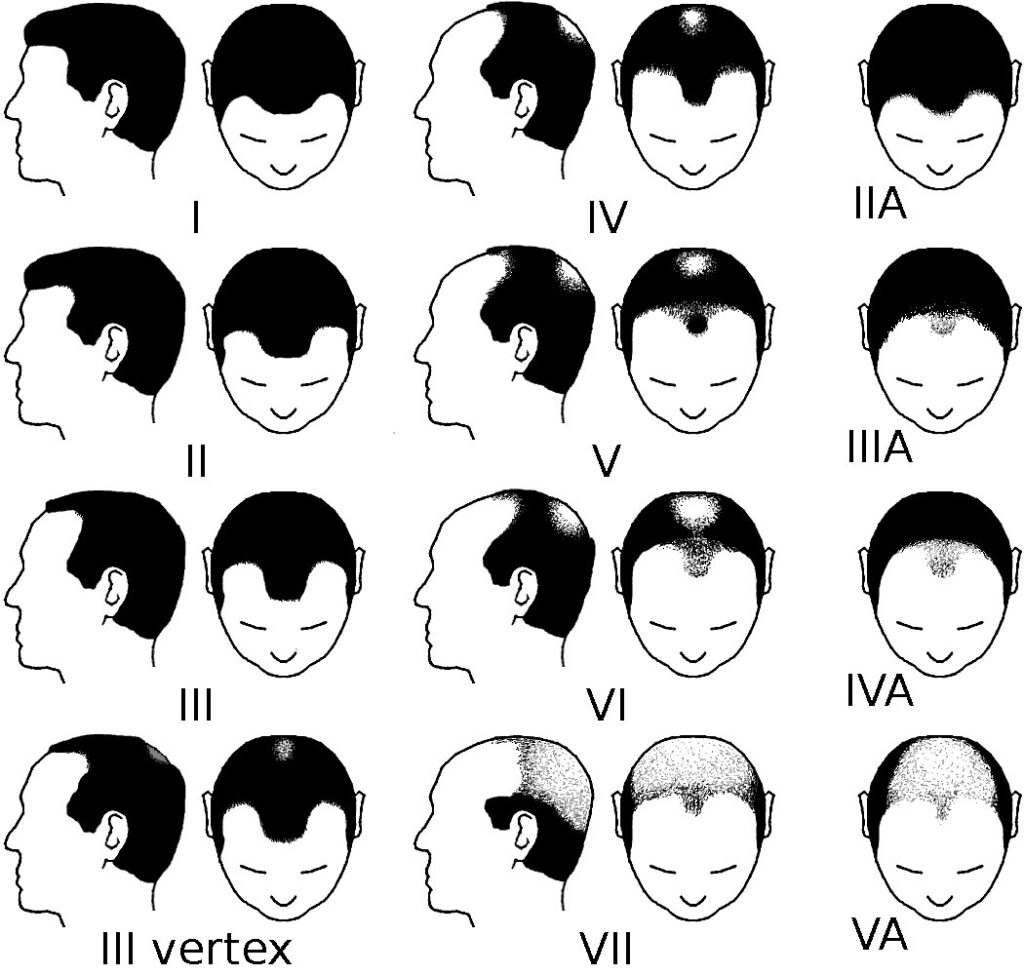
Doctors and hair specialists use the Hamilton–Norwood Scale to classify the stages of male pattern baldness. This scale divides hair loss into seven stages, helping doctors identify the severity of baldness and plan appropriate treatments.
Hair loss usually starts with a receding hairline at the temples, followed by thinning at the crown, and eventually progresses to larger bald areas if left untreated.
Stage 1: No Noticeable Hair Loss
Stage 1 represents a normal hairline with little or no hair loss. Most people at this stage have a full head of hair, and the hairline appears natural.
At this stage, hair transplant is usually not required.
Stage 2: Early Hairline Recession
In stage 2, the hairline begins to recede slightly, especially around the temples.
This stage is often referred to as a mature hairline, and hair thinning may still be minimal.
Preventive treatments such as medication or PRP therapy may help slow down further hair loss.
Stage 3: Noticeable Baldness Begins
Stage 3 is the first stage where baldness becomes noticeable.
The hairline recedes deeper at the temples, often forming an “M-shaped” pattern. Some individuals may also begin to experience thinning at the crown.
Many people start considering hair transplant treatment at this stage.
Stage 4: Significant Hair Loss
At this stage, hair loss becomes more visible.
A bald spot develops on the crown, while the hairline continues to move backward. However, a thin strip of hair usually separates the front and crown areas.
Hair transplant procedures can provide excellent results at this stage.
Stage 5: Advanced Hair Loss
In stage 5, the bald areas on the front and crown grow larger, and the strip of hair separating them becomes thinner.
Hair loss becomes clearly noticeable from most angles.
A hair transplant may require a higher number of grafts to restore natural density.
Stage 6: Severe Baldness
At stage 6, the remaining strip of hair between the crown and frontal hairline disappears.
The bald areas join together, leaving only hair on the sides and back of the scalp.
Hair transplant is still possible but requires careful planning.
Stage 7: Advanced Stage of Baldness
Stage 7 is the most severe stage of male pattern baldness.
Only a thin horseshoe-shaped ring of hair remains around the sides and back of the head, while the top of the scalp is completely bald.
Hair transplant options depend on the availability of donor hair.
Why Identifying the Stage of Baldness is Important
Knowing the stage of baldness helps doctors:
* Diagnose the severity of hair loss
* Choose the right treatment method
* Estimate the number of grafts needed for hair transplant
* Predict future hair loss patterns
Early diagnosis can significantly improve treatment results.
Hair Transplant Treatment in Guwahati
If you are experiencing hair loss, early consultation with a specialist can prevent further progression.
At Hair Transplant Guwahati, our experts provide advanced hair restoration treatments, including:
* FUE Hair Transplant
* PRP Hair Therapy
* Hair Loss Medications
* Personalized Hair Restoration Plans
We analyze your stage of baldness, hair density, and donor area to create a good treatment plan for natural and long-lasting results.
When Should You See a Hair Specialist?
You should consult a hair expert if you notice:
* Receding hairline
* Thinning hair on the crown
* Excessive hair fall
* Visible bald patches
Early treatment can help preserve existing hair and restore lost hair effectively.
✅ Book a consultation today with Arogyam Hair Transplant Guwahati and take the first step toward restoring your confidence.